
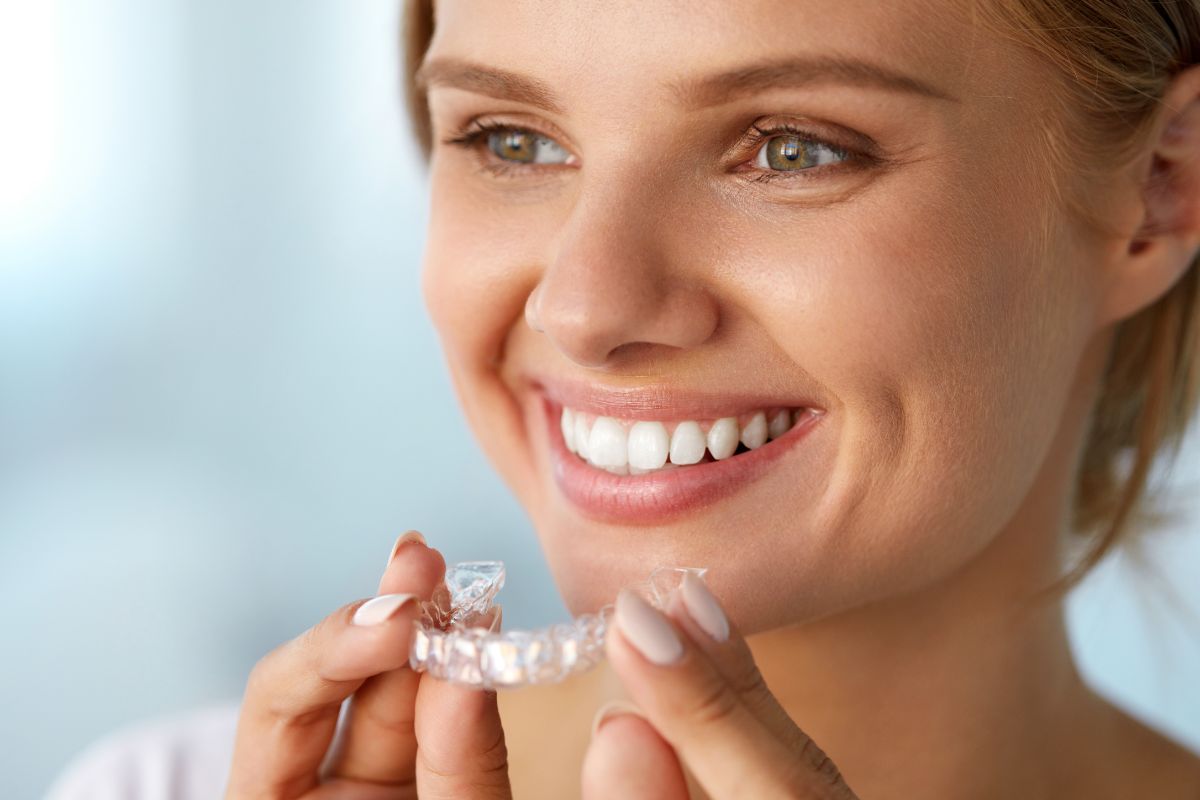
Do Clear Braces Actually Stain?
Clear braces themselves resist staining, but the tiny elastic ties holding your wire in place can discolor from pigmented foods and drinks. The ceramic brackets stay clear. The ligatures are the part that picks up color, and those get swapped out at every adjustment visit.
So when people ask, “Do clear braces stain?” the real question is how to care for those small elastics, not the brackets themselves. That distinction changes how you approach daily care.
Here’s the quick breakdown of what clear braces are made of:
- Ceramic or composite brackets: Bonded to each tooth. Designed to resist staining and blend with your enamel.
- Elastic ligature ties: Small rubber bands that hold the archwire to each bracket. These are the main culprit for discoloration.
- Archwire: The thin metal wire connecting the brackets. Usually not noticeable from a distance.
Clear braces are different from clear aligners, which are removable trays, and from metal braces, which use sleeker brackets but are fully visible. At Ventura County Orthodontics, Dr. Jared Lee and Dr. Joseph Mullen offer clear braces as a discreet fixed option for teens and adults.
The good news? Because ligatures are replaced every 4-8 weeks during your adjustment visits, any staining is usually short-lived.
What Causes Staining on Clear Braces?
A few everyday habits are responsible for most clear braces staining. Knowing the triggers makes it easier to protect your smile during treatment.
Pigmented foods and drinks are the biggest offenders. Coffee, black tea, red wine, curry, turmeric, berries and tomato sauce all leave color behind. Even a daily coffee habit can tint your ligatures within a couple of weeks.
Tobacco and nicotine products cause the fastest and most stubborn discoloration. Smoking or chewing tobacco leaves yellow-to-brown staining on ligatures, and it can affect the bond area around brackets too.
Poor oral hygiene lets plaque build up around the brackets. That buildup traps food pigments and creates a dull, cloudy look across the whole bracket area.
Colored mouthwashes are an underrated cause. Chlorhexidine rinses (often prescribed after procedures) and purple or blue rinses can tint ligatures with regular use.
Whitening toothpaste is a different kind of risk. It won’t stain your braces, but it can lighten the enamel that’s exposed while leaving the enamel under the brackets its original shade. That can create uneven coloring once your braces come off.
Visible discoloration on ligatures usually shows up within 2-4 weeks of regular exposure to staining agents. The brackets themselves hold up much longer, often through the full treatment.
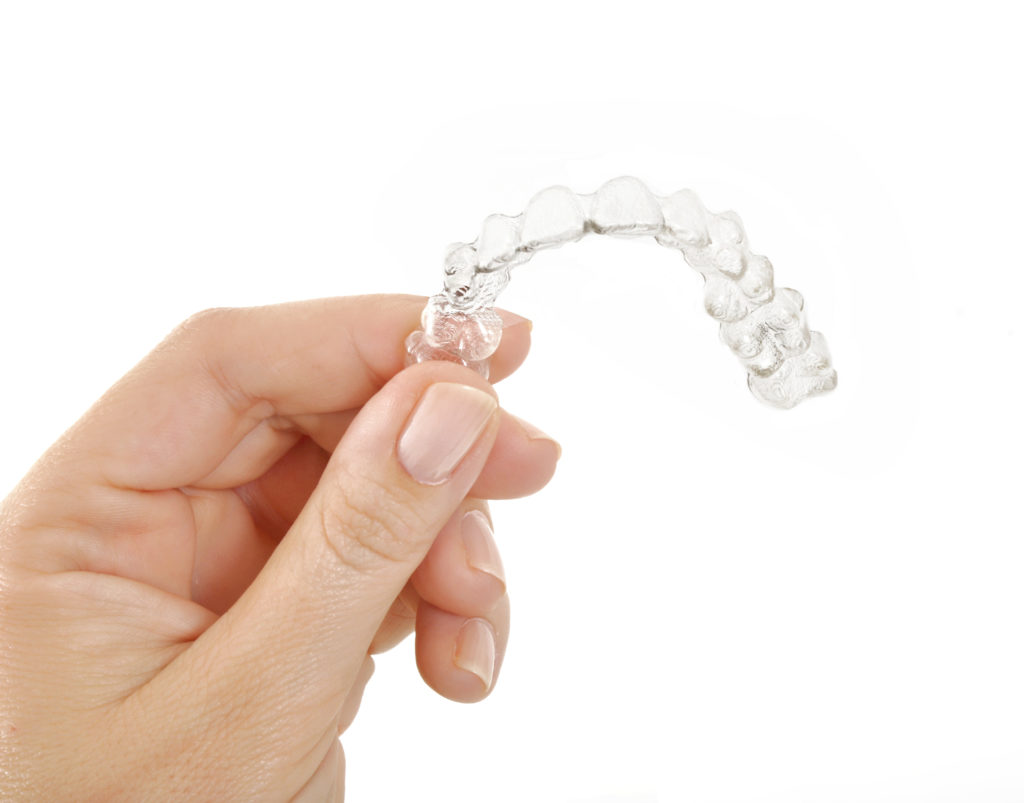
How to Keep Clear Braces Looking Clear: Daily Care Routine
A consistent routine keeps clear braces looking fresh between visits. Follow these steps every day:
How should you brush and floss with clear braces?
Brush after every meal using a soft-bristled toothbrush and a non-whitening fluoride toothpaste. Spend extra time along the gumline and around each bracket. Angle the brush to clean above and below the wire, and take your time working around the hardware.
Floss daily. Floss threaders, water flossers and interdental brushes all work well. Water flossers are especially helpful for reaching around brackets without getting tangled. If you’ve never used a water flosser, start on a low setting and work up as you get comfortable.
What should you do right after eating or drinking?
Rinse with water right after staining foods or drinks. A quick swish helps wash away pigments before they settle into the ligatures. Keep a water bottle handy so rinsing becomes automatic.
Use a straw. For coffee, tea, soda, iced tea and even wine, a straw reduces direct contact with your front brackets. Position the straw behind your front teeth when you sip.
What products should you avoid or keep handy?
Skip whitening toothpaste. Stick with a standard fluoride paste during treatment. You can whiten your teeth after your braces come off and the enamel is evenly exposed again.
Keep up with professional cleanings. Visit your general dentist every 6 months (or as recommended) for a cleaning during treatment. Our team will also check your braces and ligatures at every adjustment.
Pack a travel kit. A small zip bag with a toothbrush, floss picks and a mini toothpaste makes it easy to clean up after lunch at work or school.
Dr. Jared Lee and Dr. Joseph Mullen recommend building these habits in the first week of treatment. Once they become routine, keeping your clear braces looking clear takes almost no extra thought.
Staining Risk: Clear Braces vs. Clear Aligners vs. Metal Braces
Each treatment option handles staining differently. Here’s a side-by-side look to help you weigh your choices:
| Feature | Clear Braces | Clear Aligners | Metal Braces |
|---|---|---|---|
| Staining risk | Low on brackets, moderate on ligatures | Low (trays replaced every 1-2 weeks) | None visible |
| Visibility | Discreet, blends with teeth | Nearly invisible | Highly visible |
| Removable? | No | Yes | No |
| Diet restrictions | Avoid hard/sticky foods; limit staining foods | None while eating (trays out) | Avoid hard/sticky foods |
| Cleaning effort | Moderate (brush around brackets) | Low (brush trays, brush teeth) | Moderate |
| Best for | Teens/adults wanting fixed, discreet treatment | Self-disciplined patients who can wear trays 22 hrs/day | Complex cases, younger kids, patients who prefer fixed |
Clear braces work well if you want a fixed, discreet option and you’re willing to be a little careful with coffee and curry. The ligatures reset at every visit.
Clear aligners sidestep most staining concerns because the trays come out when you eat or drink anything but water. The trays can cloud if you don’t rinse them after wearing, but a quick clean solves that.
Metal braces don’t have the staining issue at all since the brackets are already silver. The trade-off is visibility.
Coffee drinkers, athletes who need to eat and drink on the go, teens juggling sports and school lunches and adults in client-facing jobs all tend to have different preferences. A free consult is the best way to figure out which option fits your lifestyle.
Foods and Drinks That Stain Clear Braces
Not every food will tint your ligatures. Here’s a quick severity guide:
High-risk (stains quickly and visibly):
- Coffee and espresso
- Black tea and matcha
- Red wine
- Curry and turmeric-based dishes
- Dark berries (blueberries, blackberries, pomegranate)
- Tomato sauce and marinara
- Beets
Medium-risk (occasional staining with regular use):
- Dark sodas (cola, root beer)
- Soy sauce
- Balsamic vinegar
- Mustard
- Dark-colored juices (grape, cranberry)
Low-risk (safe for daily eating):
- Water, milk, sparkling water
- White rice, pasta with white or cream sauce
- Chicken, fish, eggs
- Apples, pears, bananas
- Cheese and yogurt
Tips for enjoying trigger foods safely:
- Use a straw for cold drinks and iced coffee
- Rinse your mouth with water right after eating
- Brush within 30 minutes if possible
- Save curry night for a day when you can brush soon after
Smoking and chewing tobacco cause the fastest and most severe staining of any habit. If you use tobacco, clear braces may not be the best fit unless you’re ready to cut back during treatment. Even reducing your daily intake can make a meaningful difference in how your ligatures look between visits.
Who Is a Good Candidate for Clear Braces?
Clear braces are a great fit for a lot of people, but they aren’t for everyone. Here’s how to tell if they might work for you:
- Teens and adults who want a discreet fixed option and don’t want to manage removable trays
- Patients willing to maintain strict oral hygiene and stay aware of staining foods
- Those with moderate to complex alignment issues that may not respond as well to aligners
- People who prefer “set it and forget it” treatment without worrying about losing or forgetting aligners
- Patients who value aesthetics in professional or social settings
Clear braces may not be the best fit if you drink several cups of coffee a day and don’t want to adjust habits, if you smoke and aren’t planning to quit or if your case is simple enough that clear aligners would work just as well. Every mouth is a little different, and the right choice depends on your goals, your routine and how your teeth respond to treatment.
At Ventura County Orthodontics, Dr. Jared Lee and Dr. Joseph Mullen walk you through all your options at your free consult, including clear braces. You’ll get a personalized treatment plan that fits your smile goals, your schedule and your day-to-day life. Our team is here to answer questions, explain each option and help you feel confident about the path you choose. Ready to see if clear braces are right for you? Book your free consult today.
Frequently Asked Questions About Clear Braces Staining
Do clear braces get stained?
The clear brackets themselves resist staining and typically stay clear through your entire treatment. The small elastic ligature ties that hold the wire in place are what pick up color from food and drinks. Since those ligatures are replaced at every adjustment visit (usually every 4-8 weeks), any discoloration is temporary and easy to reset.
Can stained clear braces be cleaned at home?
You can brush gently around the brackets to remove surface plaque and food debris, which helps reduce the appearance of staining. Deep cleaning of discolored ligatures isn’t really possible at home, since the color is absorbed into the elastic material. The fastest fix is simply swapping the ligatures at your next adjustment visit.
Can I drink coffee with clear braces?
Yes, you can still enjoy coffee with clear braces. To minimize staining, use a straw, rinse your mouth with water right after and try to brush within 30 minutes. Cutting back from several cups to one a day also makes a noticeable difference over the month between adjustments.
How often are ligatures replaced?
Elastic ligatures are swapped out at every adjustment visit, usually every 4-8 weeks depending on your personalized treatment plan. That means even if your ligatures pick up some color, you’ll have fresh clear ones at your next visit. It’s one of the reasons clear braces stay looking clear long-term.
Will my teeth look uneven after braces come off?
Your teeth won’t look uneven from the braces themselves, since the brackets protect the enamel underneath. The one thing to watch out for is using whitening toothpaste during treatment, which can lighten exposed enamel but not the enamel under the brackets. Stick with regular fluoride toothpaste and whiten after treatment if you want that extra brightness.
Is whitening toothpaste safe with clear braces?
We recommend skipping whitening toothpaste during treatment. It won’t damage your braces, but it can create an uneven shade once the brackets come off. A standard fluoride toothpaste keeps your teeth and ligatures looking consistent throughout treatment, and you’ll have every reason to smile when your braces come off and your enamel color matches evenly.